🤖 Artificial Intelligence & Machine Learning Course

📘 Introduction to Artificial Intelligence & Machine Learning

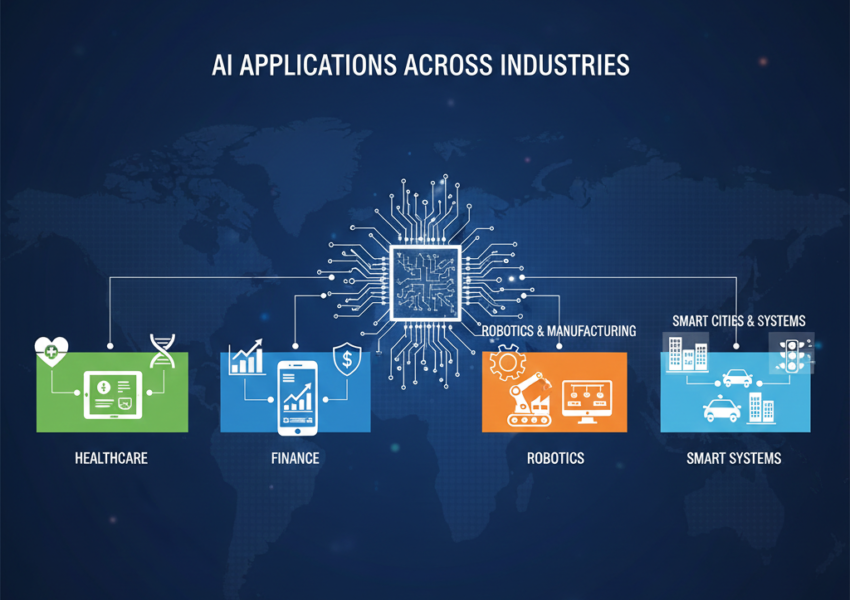
Artificial Intelligence and Machine Learning are transforming the way technology interacts with humans and data. From voice assistants and recommendation systems to self-driving vehicles and medical diagnostics, intelligent systems are becoming part of everyday life.

Artificial Intelligence (AI) and Machine Learning (ML) focus on creating systems that can learn, adapt, and make decisions with minimal human intervention.

An AI and machine learning course introduces learners to the concepts, techniques, and real-world applications of intelligent technologies.

🧠 What is Artificial Intelligence?

Artificial Intelligence refers to the ability of machines to perform tasks that typically require human intelligence. These tasks include reasoning, learning, problem-solving, perception, and language understanding.

AI systems are designed to simulate human-like decision-making and improve performance over time. They are used in automation, analytics, customer service, healthcare, and many other fields.

📊 What is Machine Learning

Machine Learning is a subset of artificial intelligence that focuses on building systems that can learn from data. Instead of being explicitly programmed, machine learning models improve by analyzing patterns and making predictions based on data.

Machine learning enables systems to adapt to new information, making them suitable for dynamic and complex environments.

🔗 Relationship Between AI and Machine Learning
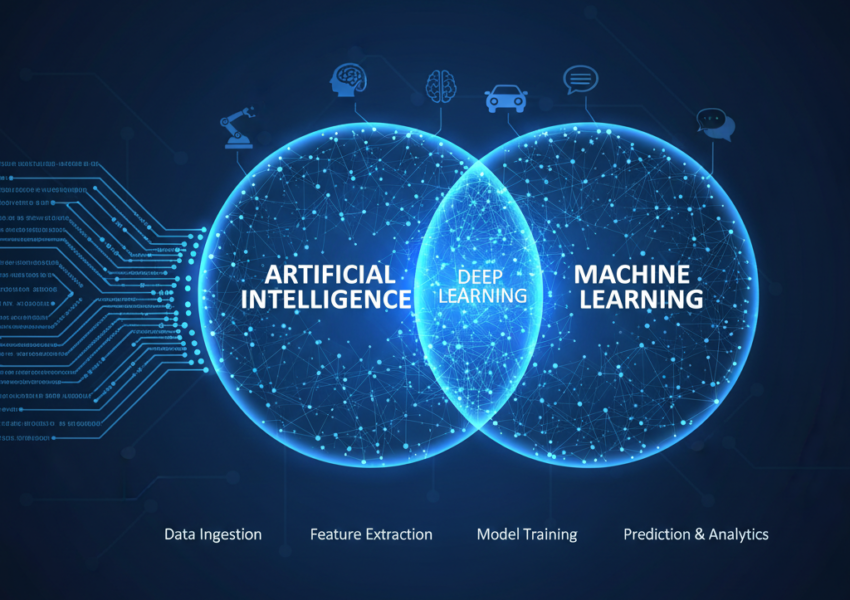
Artificial Intelligence is the broader concept of intelligent behavior, while machine learning provides the techniques that allow systems to learn from data. Together, they form the foundation of modern intelligent applications.

Machine learning acts as the engine that powers many AI systems used today.

AI and machine learning

🧩 Core Concepts in AI & Machine Learning

An AI and machine learning course builds understanding of essential concepts that support intelligent systems.

Key learning areas include:

  • Data preparation and analysis

  • Learning models and algorithms

  • Model evaluation and improvement

  • Pattern recognition

  • Decision-making systems

These concepts help learners understand how machines learn and make predictions.

🔄 Types of Machine Learning

Machine learning can be categorized based on how systems learn from data.

  • Supervised learning involves training models using labeled data

  • Unsupervised learning focuses on discovering patterns in unlabeled data

  • Reinforcement learning allows systems to learn through feedback and rewards

Each type plays a unique role in building intelligent applications.

🌍 Real-World Applications of AI & Machine Learning

AI and machine learning are used across multiple industries to improve efficiency and innovation.

Common applications include:

  • Recommendation systems

  • Image and speech recognition

  • Predictive analytics

  • Automation and robotics

  • Healthcare diagnostics

These applications demonstrate how intelligent systems solve complex real-world problems.

🎓 Who Should Learn AI & Machine Learning?

This course is suitable for:

  • Students with interest in advanced technology

  • Graduates in technical and non-technical fields

  • Working professionals seeking skill advancement

  • Developers expanding into intelligent systems

A basic understanding of mathematics and programming is helpful but not always mandatory for beginners.

💼 Career Opportunities in AI & Machine Learning

After completing training in AI and machine learning, learners can work in roles such as:

  • AI engineer

  • Machine learning engineer

  • Data scientist

  • Research analyst

  • Intelligent systems developer

These roles are in high demand due to the rapid adoption of intelligent technologies.

Close-up of a businessman extending hand for a handshake, symbolizing agreement and partnership.

🚀 Why Choose AI & Machine Learning as a Career?


AI and machine learning offer exciting career paths focused on innovation and problem-solving. Professionals in this field work on cutting-edge technologies that shape the future.

This career path provides strong growth potential, global opportunities, and continuous learning.

🔮 Importance of AI in the Future of Technology


AI is expected to play a major role in shaping future industries. Intelligent systems will continue to improve productivity, accuracy, and decision-making across sectors.

Understanding AI helps professionals stay relevant in an increasingly automated and data-driven world.

✅ Final Conclusion


Artificial Intelligence and Machine Learning represent the future of technology. These fields enable machines to learn, adapt, and make intelligent decisions, transforming industries and daily life.

For learners seeking advanced and future-focused IT careers, AI and machine learning offer powerful opportunities with long-term impact.

Scroll to Top